Nexus Automech Pvt.Ltd. @2024. All Rights Reserved
Nexus Automech Pvt.Ltd. @2024. All Rights Reserved
Nexus Automech
1st January 1970
Introduction
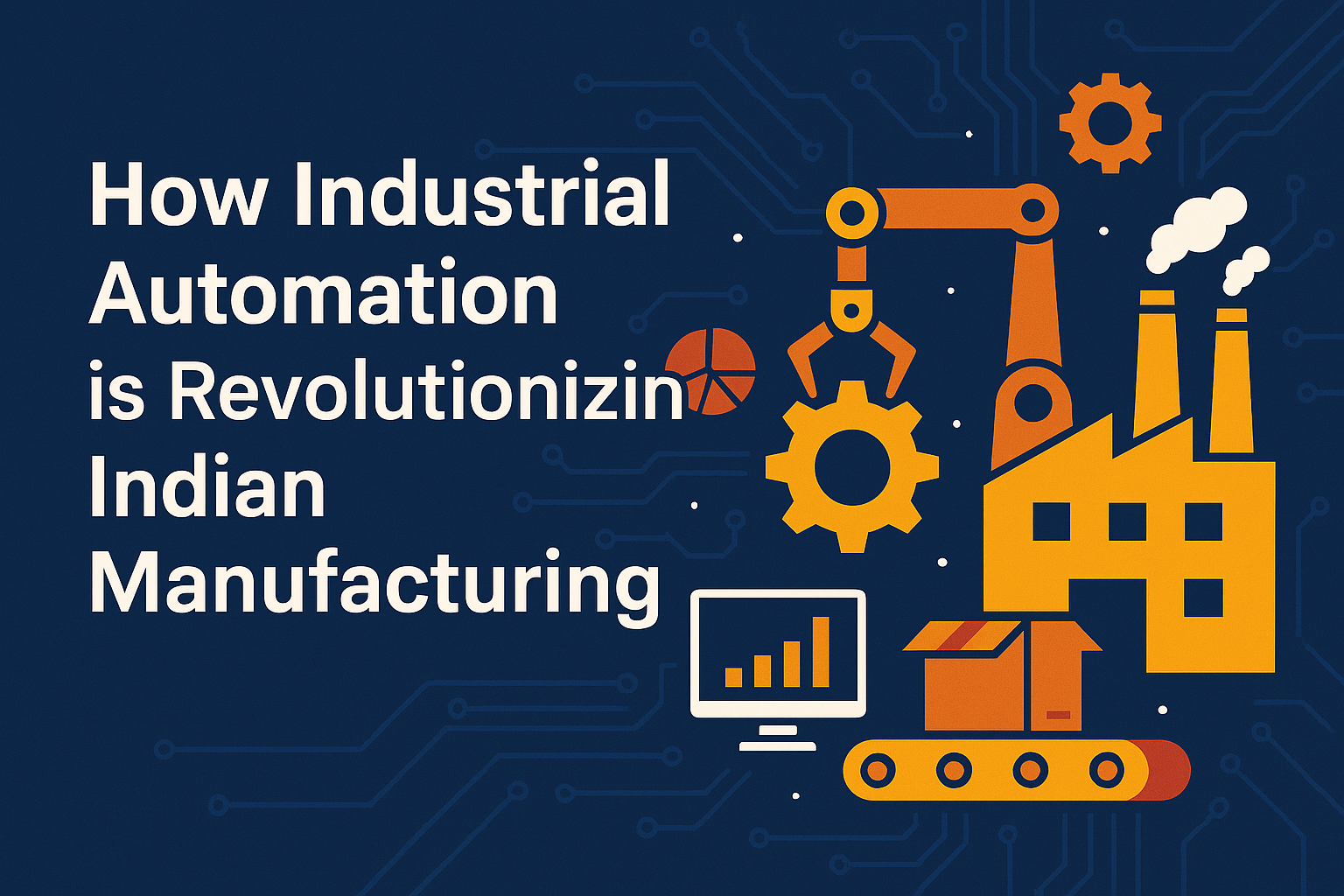
The Indian manufacturing landscape is experiencing a remarkable shift, and industrial automation is at the forefront of this change. The era of completely manual operations is behind us. Nowadays, machines are smart, sensors are in constant communication, and data is the driving force behind every decision. This isn’t just a gradual change — it’s a full-blown revolution.
1. The Rise of Smart Factories in India
With the advent of Industry 4.0, smart factories have become a reality in India, no longer confined to the West. Industries across the board, from automotive to fast-moving consumer goods (FMCG), are adopting automation technologies like PLCs, SCADA systems, and AI-driven quality control. The outcome? A transition from reactive maintenance to predictive operations, which saves both time and money.
2. Improving Efficiency and Reducing Downtime
Automation guarantees round-the-clock operations without the risk of fatigue, ensures consistent output, and minimizes human error. By utilizing pneumatic automation, robotic arms, and conveyor systems, Indian manufacturers are seeing productivity boosts of up to 30%.
3. The Role of Sensors & Actuators
Brands like SICK and CKD are providing sensors and actuators that facilitate real-time decision-making. For instance:
1.SICK proximity sensors help avoid collisions and monitor product flow.
CKD air cylinders automate repetitive tasks with pinpoint accuracy.
4. Job Creation, Not Just Replacement
Rather than replacing jobs, automation in India is transforming job roles. There’s a growing demand for engineers, data analysts, and automation specialists. Upskilling is becoming the essential link between traditional labor and advanced tech operations.
5. Energy & Cost Efficiency
Automation plays a crucial role in monitoring and optimizing energy use, leading to operational cost reductions of up to 20% in some instances. Additionally, minimizing errors helps cut down on waste — a significant concern in industries like pharmaceuticals and electronics.
6. Real-World Impact: Case Study Snapshot
A factory in Pune that produces auto parts implemented a semi-automated pick-and-place system using CKD grippers and achieved a remarkable 40% reduction in cycle time. The return on investment? Realized in just 8 months.
Conclusion
2.Industrial automation isn’t just a glimpse of the future — it’s happening right now. In India, it’s giving manufacturers the tools they need to be quicker, smarter, and ready to compete on a global scale. Those who welcome this transformation will be at the forefront of innovation in the coming decade.
Focus Keywords:
industrial automation in India
smart factories
Indian manufacturing automation
SICK sensors India
CKD pneumatic automation