Nexus Automech Pvt.Ltd. @2024. All Rights Reserved
Nexus Automech Pvt.Ltd. @2024. All Rights Reserved
Nexus Automech
13th December 2025
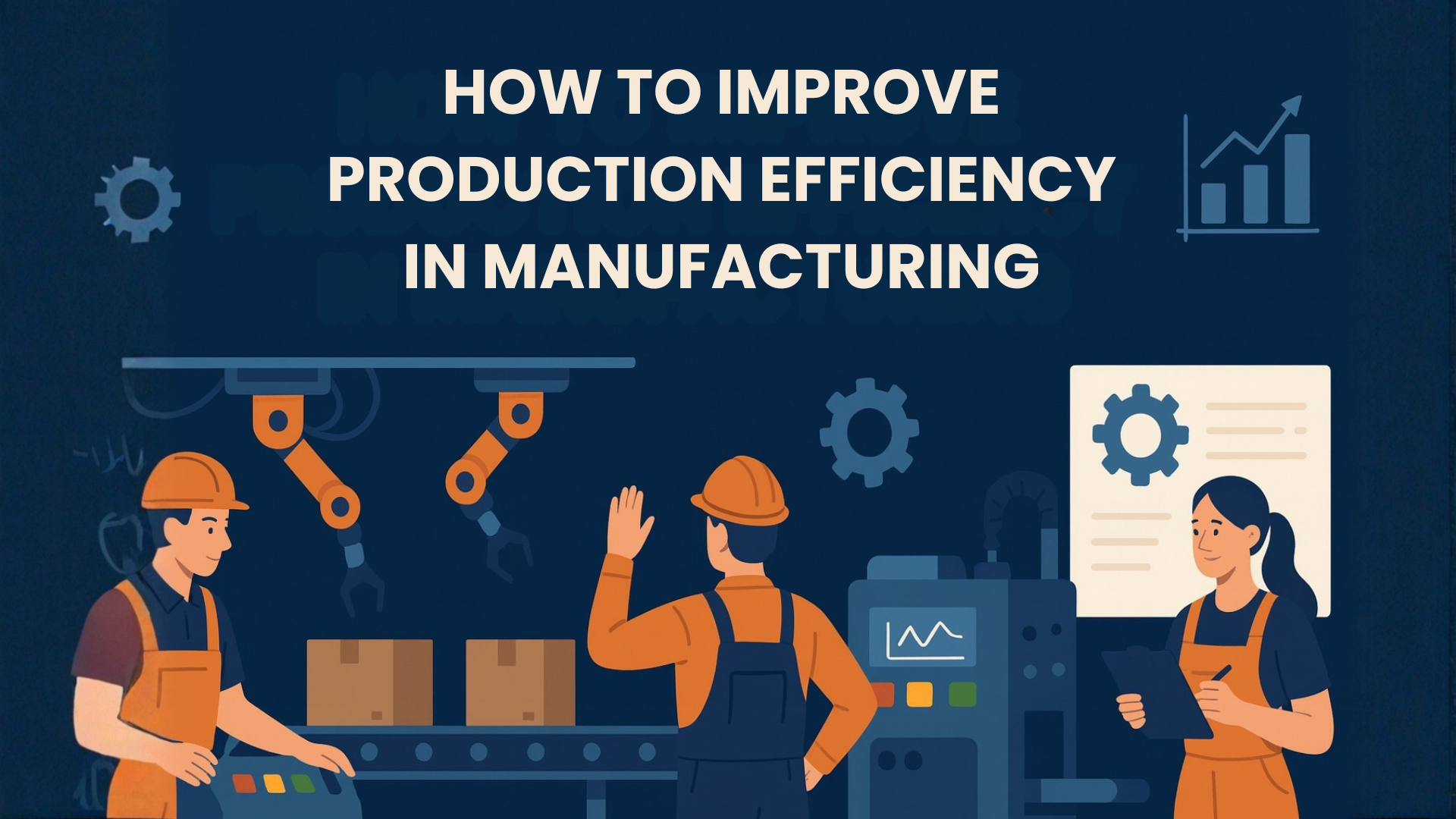
How to Improve Production Efficiency in Manufacturing
Production efficiency is the heartbeat of every manufacturing plant. When efficiency drops, everything feels the impact; output slows, costs rise, pressure builds on plant managers, and the entire workflow becomes unstable.
In most plants, efficiency issues don’t appear suddenly; they grow quietly over time through manual variations, unplanned downtime, and inconsistent decision-making. The good news is that efficiency can be improved predictably when the right strategies are applied.
This guide breaks down the most practical, proven, and modern methods to improve production efficiency, especially for plants aiming to grow without increasing workforce, cost, or complexity.
What Is Production Efficiency? (Simple Explanation)
Production efficiency is the ability of your plant to produce more output using the same time, resources, people, and machines, without compromising quality.
If two shifts produce different output using the same process, or if your plant depends heavily on a few skilled people to maintain stable production, you already have an efficiency gap.
In real terms:
Efficiency = Output ↑ and Losses ↓
Why Production Efficiency Declines in Most Plants
Most efficiency problems come from a few predictable causes:
1. Manual operations & human dependency
When operators adjust parameters manually, results vary shift to shift.
2. Frequent downtime and slow response
Even 10 minutes of downtime repeated daily becomes a major efficiency leak.
3. Lack of real-time visibility
If supervisors cannot see live data, decisions are always delayed.
4. Inconsistent workflows
Different teams follow different methods → inconsistent results.
5. High scrap, rework, or rejection rate
Every reworked batch reduces overall efficiency.
6. Poor machine utilization
Machines sit idle while people prepare or make decisions.
7. No predictive alerting
Plants only react after problems appear, never before.
These issues are common, but all of them can be solved.
Ways to Improve Production Efficiency in Manufacturing
Below are the most actionable, real-world solutions plant managers use to improve throughput, reduce losses, and stabilize performance.
1. Standardize and Document Every Critical Process
Most plants unknowingly lose efficiency because people follow different methods:
• Different dosing timing
• Different setpoints
• Different speed adjustments
• Different warm-up or cleaning routines
Standardizing these steps reduces variation and stabilizes output.
A process should never depend on a person, only on a defined workflow.
2. Reduce Manual Intervention in Critical Steps
Manual adjustments create unpredictable results.
Automation creates repeatable, accurate, and optimized performance.
Even partial automation, dosing, mixing, temperature control, and pressure control can drastically increase efficiency by eliminating human error and reaction delays.
3. Implement Real-Time Monitoring to Prevent Delays
Production slows down when issues are detected late.
Real-time SCADA dashboards provide:
• Instant alarms
• Live performance trends
• Machine utilization data
• Predictive alerts
Early detection of abnormal behavior
If supervisors can see problems early, efficiency never drops.
Nexus Automech helps plants implement real-time monitoring systems that give complete visibility of the process.
4. Improve Machine Utilization and Reduce Idle Time
Many plants run only 65–75% utilization without realizing it.
Idle time usually comes from:
• Waiting for manual approval
• Waiting for setpoint adjustments
• Delayed raw material flow
• Slow cleaning/changeover
• Unplanned downtime
Automation allows machines to run longer, smoother, and with fewer interruptions.
5. Automate Repetitive and Error-Prone Tasks
Tasks like:
• Dosing
• Mixing
• Heating
• Filling
• Transfer
• Timing
• Logging
…often consume more time than necessary when done manually.
Automating these steps improves:
• Speed
• Accuracy
• Repeatability
• Safety
• Efficiency
This is where Nexus Automech delivers the most impact, automating repetitive processes to reduce time, scrap, and operator fatigue.
6. Optimize Material Flow and WIP Handling
Delays in material movement instantly reduce efficiency.
Simple improvements like workflow redesign, automated conveyors, batching systems, or improved sequencing can save hours per day.
A well-optimized workflow = higher throughput with the same resources.
7. Train Operators to Work with Data, Not Guesswork
Efficiency improves when operators:
• Understand alarms
• Follow the automated workflow
• Read trends
• Respond quickly
• Avoid manual overrides
The right training converts operators into efficiency drivers.
8. Use Digital Logs and Batch Records for Faster Decisions
Manual logbooks hide more problems than they reveal.
Digital records allow managers to:
• Track repeated deviations
• Identify efficiency leaks
• Compare performance across shifts
• Analyze trends quickly
Better data = better decisions.
How Automation Boosts Production Efficiency
Automation is the single most effective long-term solution for efficiency improvement. It increases output without increasing workforce size, reduces scrap and downtime, and protects your process from shift variations.
Automation delivers:
✔ Precise parameter control
Setpoints remain accurate, stable, and repeatable.
✔ Zero delay in corrections
Sensors adjust instantly.
✔ Reduced downtime
Automatic fault detection + alarms = faster recovery.
✔ Lower scrap & rework
Consistent batch quality improves efficiency.
✔ Higher throughput
Machines run faster and smoothly.
✔ Predictability
Stable processes → stable output → predictable efficiency.
A plant that automates becomes smoother, smarter, and more scalable.
Best Solution to Improve Production Efficiency
While SOPs, training, and good planning help, automation is the only scalable and sustainable way to improve production efficiency in manufacturing.
Manual processes create variation.
Automation creates consistency.
Manual supervision slows response.
Automation reacts instantly.
Manual logs hide inefficiencies.
Automation shows real-time truth.
That’s why modern plants choose automation as their growth engine.
How Nexus Automech Helps Improve Efficiency
Nexus Automech specializes in automating inefficient workflows in manufacturing plants.
We provide:
• PLC/SCADA Automation
• Batch Automation Systems
• Automated Dosing & Mixing Solutions
• Modular Skid Systems
• Real-Time Dashboards & Monitoring
• Custom Industrial Automation Solutions
Our systems help plants:
✔ Reduce downtime
✔ Increase output
✔ Improve consistency
✔ Minimize manual dependency
✔ Scale smoothly
✔ Reduce scrap & rework
Efficient plants grow faster.
And automation makes efficiency predictable.
Conclusion: Efficiency Improves When Control Improves
Production efficiency is not a mystery; it is a controlled outcome.
When plants reduce manual dependency, enhance visibility, and automate critical steps, efficiency increases naturally. With the right automation partner, your plant can achieve stable output, higher throughput, and long-term reliability.
Final CTA: Want to Improve Production Efficiency in Your Plant?
If you want measurable, long-term improvements:
Nexus Automech can evaluate your current workflow and recommend the right automation strategy.
Boost efficiency → Reduce downtime → Improve output → Scale confidently.